How KYB Regulations in Mexico Have Evolved Over Time


There have been significant changes in KYB regulations in Mexico over the past few years. The most recent was the Ley Federal para la Prevención e Identificación de Operaciones con Recursos de Procedencia Ilícita (LFPIORPI) reform in 2025, which was born after FinCEN issued sanctions to CIBanco, Intercam, and Vector, which led to their license revocation.
This piece covers two things: how Mexico’s AML framework evolved to where it is today, and a deep dive on the most recent 2025 reform.
How Mexico's AML framework has evolved over time
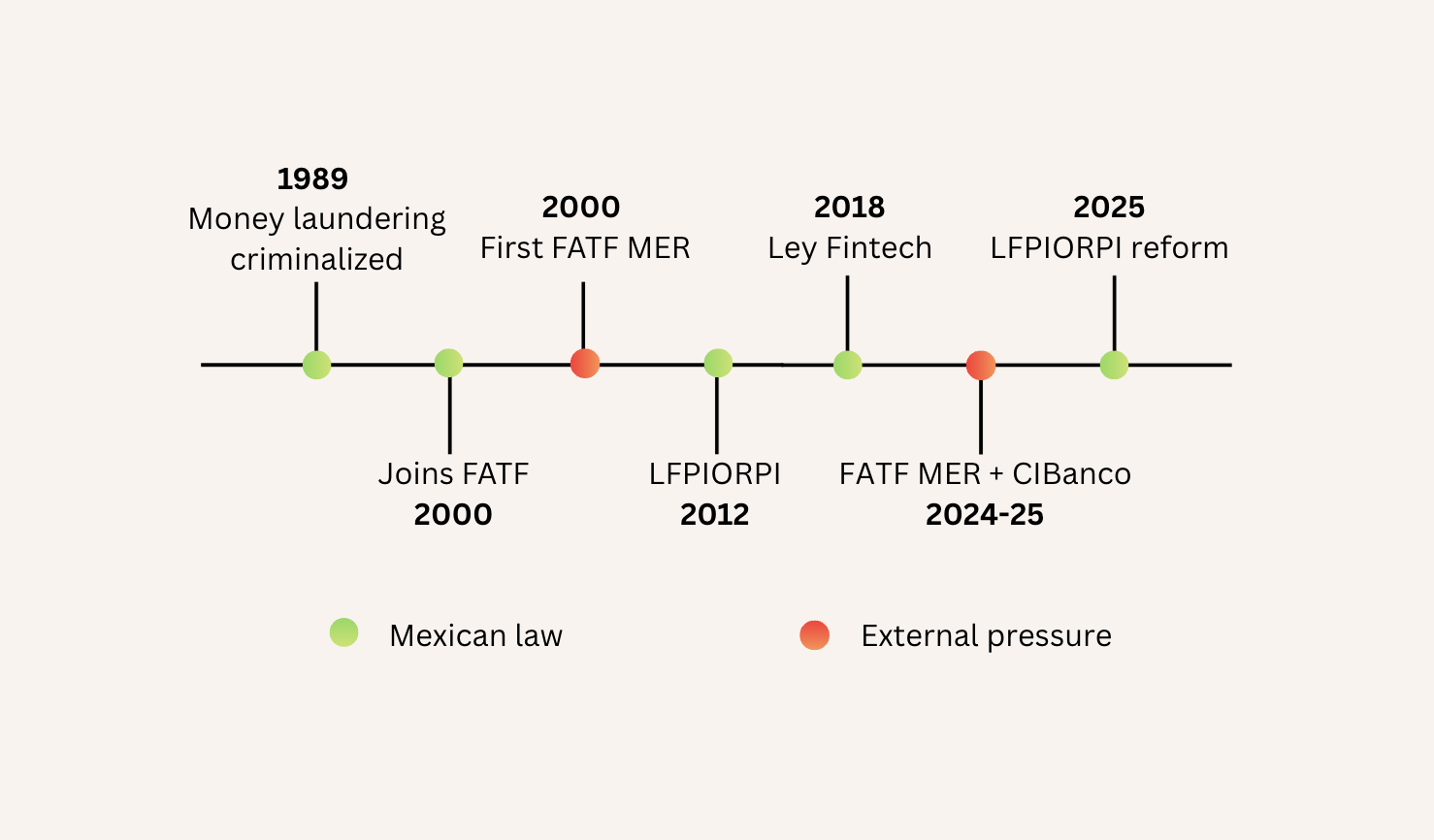
Mexico’s AML regime is younger than most compliance professionals assume, and it has been shaped as much by external pressure as by internal will.
- 1989: Money laundering is criminalized for the first time in Mexico.
- 2000: Mexico joins the Financial Action Task Force (FATF), an intergovernmental organization designed to combat money laundering (AML), terrorist financing (CFT), and other threats to the global financial system, and comes under formal peer review for the first time. External accountability begins.
- 2012: LFPIORPI is enacted: Mexico's foundational AML law. For the first time, there is a single statutory framework for preventing and identifying transactions with illicit funds. It establishes which activities are "vulnerable," who must report, and what the obligations are.
- 2018: Ley Fintech passes, bringing fintechs and crypto exchanges in Mexico explicitly under AML obligations for the first time. Before this, fintech operated in a regulatory gray area.
- 2025: LFPIORPI reform is published in the Diario Oficial de la Federación (DOF) July 16, 2025, which is Mexico’s official government gazette used to publish new laws, presidential decrees, regulations, and public notices so they become legally binding across the country. It doesn't just add obligations; it changes the underlying logic of what compliance requires.
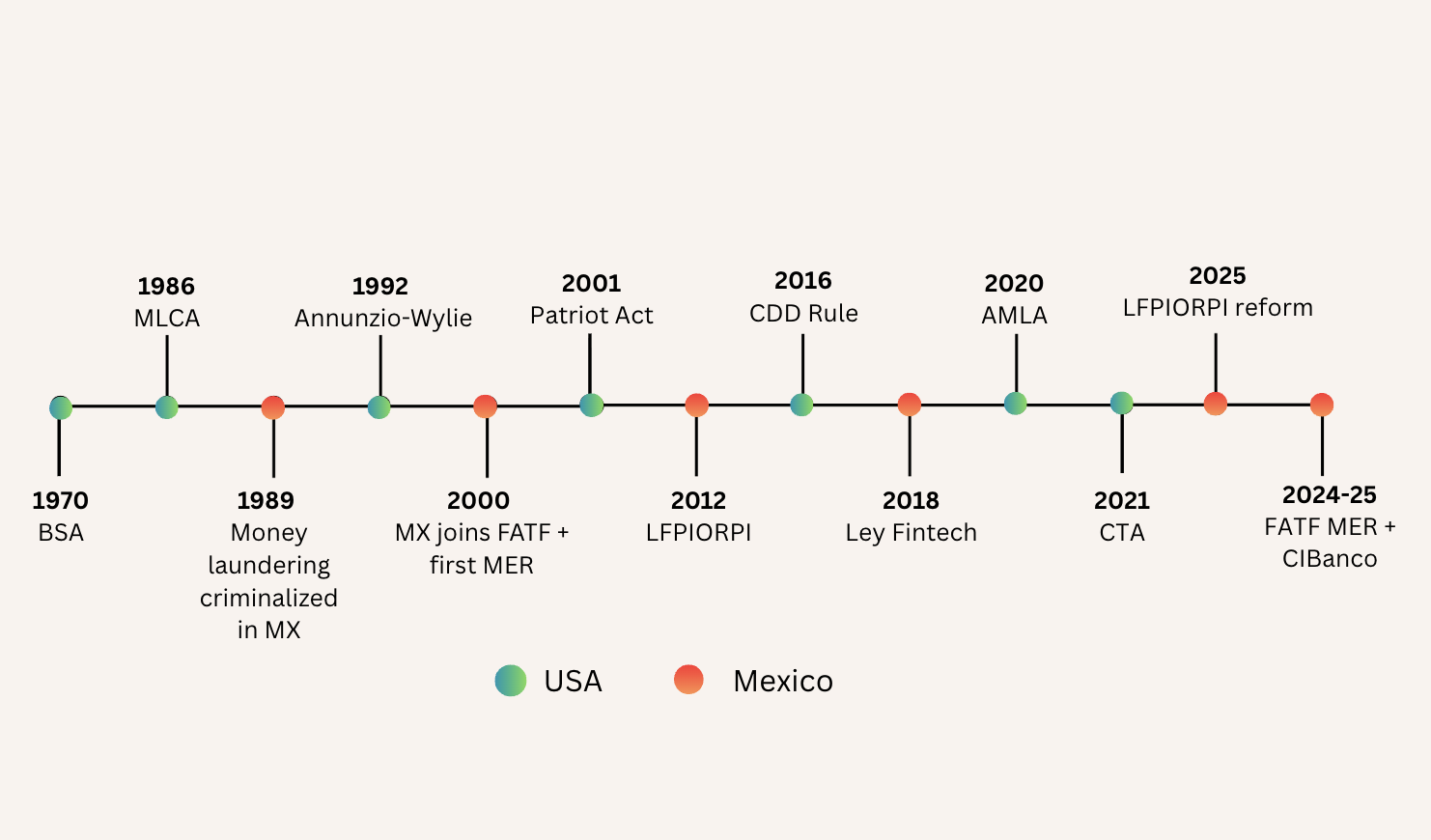
To put things into perspective, this is the corresponding US timeline overlapped with Mexico’s, and you can see Mexico’s history started nearly 20 years later.
The most important changes in the 2025 reform
Before July 2025, institutions had a lot of best practices and habits that were endorsed, but with the reform many of these nice to haves became must haves and part of the law. Other requirements already existed, but the reform made them stronger with added layers of scrutiny.
The reform added many new obligations to the LFPIORPI, and this section will walk you through some of the most significant ones. You can find the full decree as published in the Diario Oficial de la Federación here.
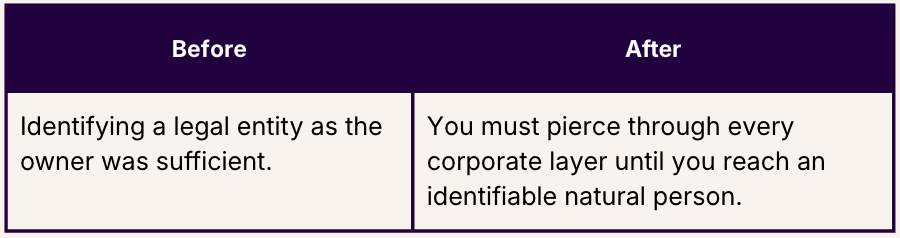
1. Tracing ultimate beneficial owner (UBO) through legal entities until reaching a natural person
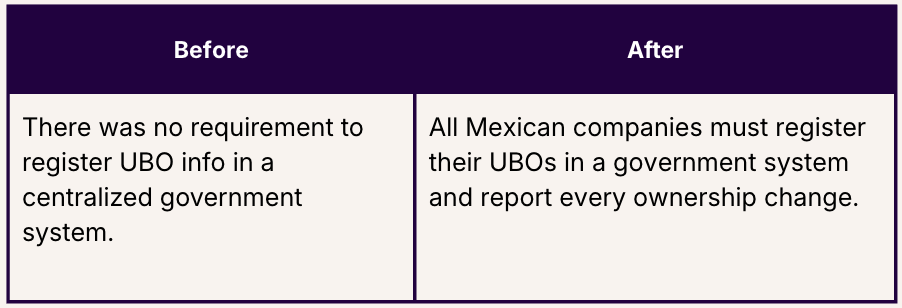
2. UBO registration in Ministry of Economy system
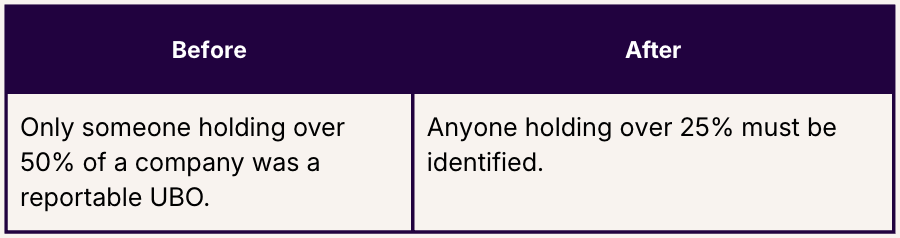
3. UBO threshold 50% → 25%
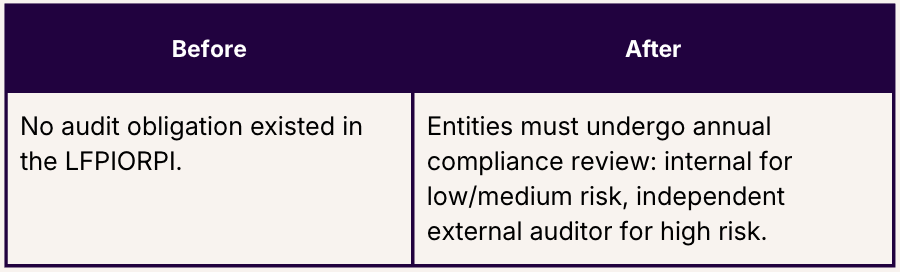
4. Annual audit requirement
5. Automated monitoring mechanism

A few other changes to note:
- Record retention from 5 to 10 years: the period for which entities must retain documentation related to vulnerable activities has been doubled, from 5 to 10 years.
- Annual training: all personnel handling vulnerable activities are now required to complete AML training on an annual basis.
- 24-hour suspicious activity reporting: the requirement to report suspicious activity within 24 hours, including attempted transactions that were never completed, has now been codified directly into law rather than existing only under secondary regulation.
The bigger picture
Through turning best practices into actual rules and tightening existing processes, the reform pushes institutions to make a consistent, reasoned, and documented decision for every customer that is catered to their actual risk.
As regulations evolve, automation makes it significantly easier to keep up. Rather than retraining large compliance teams or manually overhauling processes, platforms like Niva adapt to regulatory changes and reduce the operational burden of implementing them. A clear example is UBO tracing: what would otherwise require manually piercing through layers of corporate ownership can be automated, with built-in audit trails that make recurring compliance reviews far less painful.
Sources:
- Diario Oficial de la Federación — Decreto por el que se reforman y adicionan diversas disposiciones de la LFPIORPI (July 16, 2025) dof.gob.mx/nota_detalle.php?codigo=5763161&fecha=16/07/2025
- EY México — Reform of the Anti-Money Laundering Law 2025: Impact and new obligations for obliged entities (July 22, 2025) ey.com/es_mx/technical/tax/boletines-fiscales/reform-antimoney-laundering-law-2025
- KPMG México — Flash | Decree reforming and adding provisions to the LFPIORPI (July 2025) kpmg.com/mx/es/tendencias/2025/07/flash-decree-reforming-and-adding-provisions-to-the-lfpiorpi.html
- Mijares, Angoitia, Cortés y Fuentes — Reform to the Federal Law for the Prevention of Money Laundering (July 18, 2025) mijares.mx/en/noticias/reforma-a-la-ley-federal-para-la-prevencion-e-identificacion-de-operaciones-con-recursos-de-procedencia-ilicita
- Hogan Lovells — Reform of Mexico's Anti-Money Laundering Law: New measures to combat transactions with funds of illicit origin (July 18, 2025) hoganlovells.com/en/publications/reform-of-mexicos-antimoney-laundering-law
- Niva — The State of KYB in Mexico (September 3, 2024) niva.co/post/state-of-kyb-mexico

.png)
.png)

